
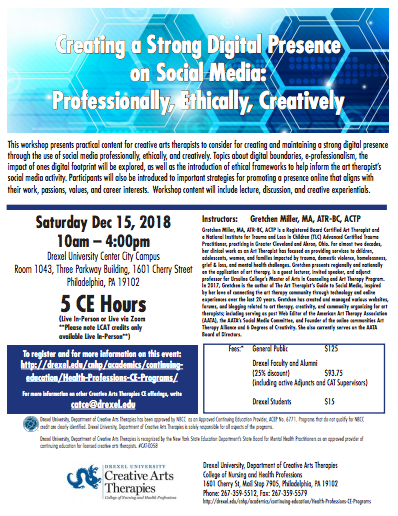
Excited to announce this Philadelphia workshop hosted by Drexel University College of Nursing and Health Professions’ Creative Arts Therapies Department on December 15, 10-4 pm with 5 CEs, including content in ethics— There is still time to register if you are interested in attending this offering in-person or online via Zoom live webcast.
This workshop presents practical content for creative arts therapists to consider for creating and maintaining a strong digital presence through the use of social media professionally, ethically, and creatively.
Topics to be covered include:
- Digital boundaries
- e-Professionalism
- The impact of ones digital footprint
- Introduction to ethical frameworks to help inform professional social media activity
- Important strategies for promoting a presence online aligning with ones work, passions, values, and career interests.
- Content delivered through lecture, discussion, and creative experientials.
Learning Objectives:
At the end of this workshop participants will be able to:
- Recognize 3 competences for developing an ethical and professional digital presence
- Learn 3 strategies for professionally sharing content on social media
- Identify 3 ethical frameworks and strategies to consider for professional social media use as a mental health professional
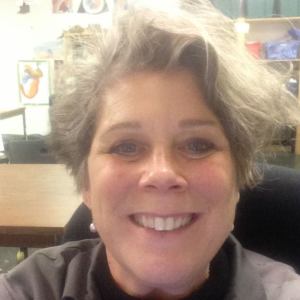 This week’s chat features Theresa Zip, MA, BEd, a Registered Art Therapist practicing in Edmonton, Canada. Theresa always has loved making art. She got 3/4 of her BFA in art (from 2 different schools!) then switched to art education. She began teaching in 1983, back when technology was the hand-cranked purple-ink spirit duplicator! She remembers her first foray into word-processed exams, students freaked out that they wouldn’t be able to recognize familiar content in this weirdly professional looking format. Teaching for over 20 years (mostly high school, with some elementary and junior high sprinkled in) it was two years teaching art in a maximum-security juvenile detention facility that convinced her to make the shift to study art therapy.
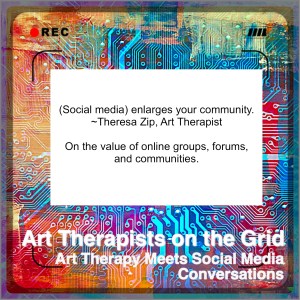 The flip side of the perks of being independent, hidden away, and working one-to-one also has its drawbacks: among them can be feelings of invisibility, self-doubt and professional isolation. While nothing can replace face-to-face mutual support, Theresa has found valuable encouragement and community in several online art therapy related groups, projects, mental health resources, and art communities. In this conversation, Theresa speaks to how she has accessed and benefitted from these resources for professional development, support, and self-care as an independent art therapy practitioner.
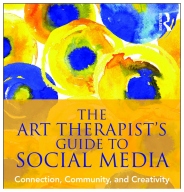
 The Art Therapist's Guide to Social Media
You must be logged in to post a comment.